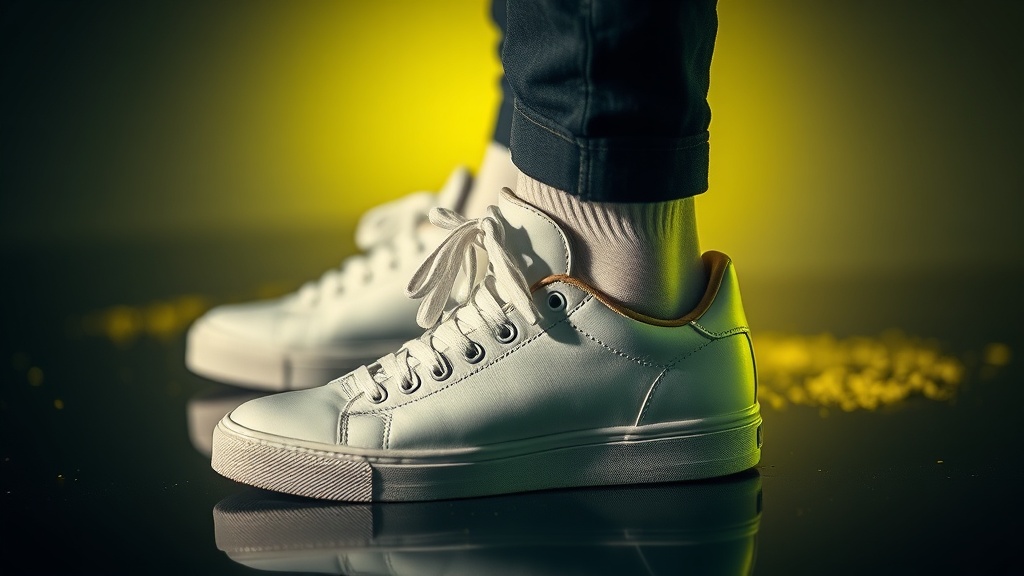
Why Your White Sneakers Are Turning Yellow

Quick Tip
Avoid excessive heat when drying your sneakers to prevent the glue from oxidizing and causing yellow stains.
The Myth of the "Natural" Discoloration
Most people assume that yellowing white sneakers are caused by dirt or lack of cleaning. In reality, the yellow tint you see on your white leather or canvas shoes is often a chemical reaction rather than surface grime. If you are seeing yellow streaks appearing after a wash or even while sitting in your closet, you aren't just dealing with a dirty shoe—you are dealing with material degradation or improper drying techniques.
The Three Main Culprits
Understanding why this happens prevents you from wasting money on replacement pairs every six months. Here are the primary reasons your footwear is losing its brightness:
- Oxidation of Adhesives: This is the most common issue with mid-range sneakers like Adidas Stan Smiths or Nike Air Force 1s. The glue used to bond the upper to the sole reacts with oxygen and moisture over time. When you wash them, you often accelerate this process by introducing too much water into the seams.
- Improper Drying: If you leave your sneakers near a radiator or in direct sunlight to dry, the heat causes the internal components and adhesives to yellow. Heat is the enemy of white synthetic materials.
- Residual Detergent: Using too much soap or failing to rinse the shoes thoroughly leaves a chemical residue. As the water evaporates, the leftover surfactant reacts with the air and turns a distinct yellowish hue.
How to Prevent and Fix the Issue
To keep your sneakers looking crisp, you need to change your maintenance routine. Stop throwing them in the washing machine; the agitation and high heat are a recipe for structural and aesthetic failure. Instead, follow these steps:
- Spot Clean Only: Use a soft brush and a dedicated sneaker cleaner, such as Jason Markk or Crep Protect. Use minimal water and focus only on the affected areas.
- Control the Drying Process: Always air-dry your shoes in a cool, shaded area. Stuff the inside with white paper towels (never newspaper, as the ink will transfer) to absorb moisture and maintain the shape.
- Check Your Sole Construction: If you notice the yellowing is happening at the seams, it is likely the glue oxidizing. This is a sign of lower-quality construction. If you want longevity, look for sneakers with cup soles (where the sole is a single piece of rubber) rather than glued-on rubber strips.
If you find that your footwear is losing its integrity due to poor construction, you might also be experiencing issues with designer shoes losing their shape. Proper care and understanding material science will save you from the endless cycle of "buy, wear, return."