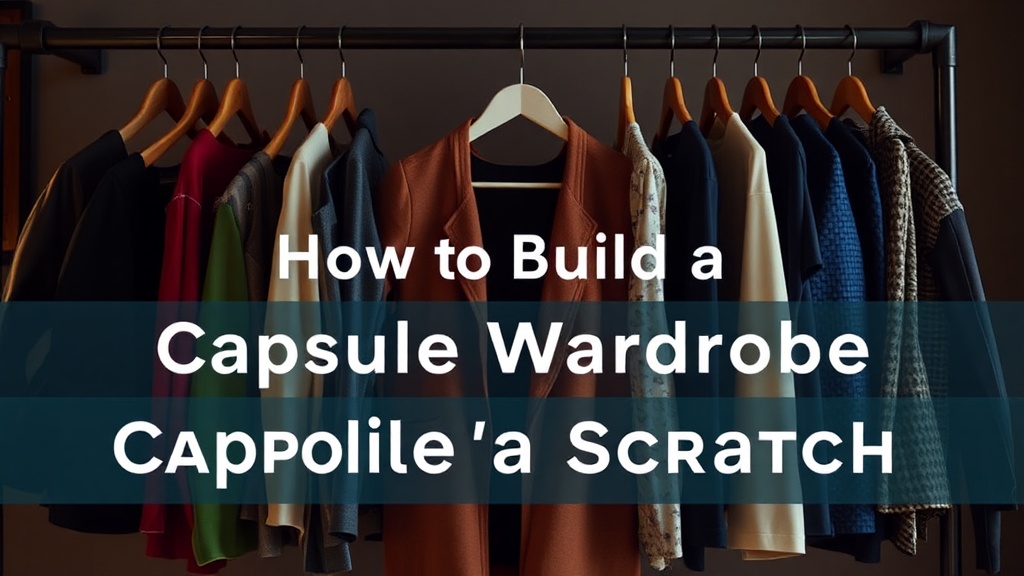
How to Build a Capsule Wardrobe from Scratch

Let’s be honest: your closet is likely a graveyard of "good deals." You know the ones—the $15 polyester blouse that looked great on the model but turned into a wrinkled, translucent mess after one wash, or the "designer-inspired" blazer that lost its shape before you even finished the first wear. Having spent years in the returns department, I have seen the sheer volume of clothing that ends up in landfills because the quality simply wasn't there.
A capsule wardrobe isn't just a minimalist trend or an aesthetic for Instagram; it is a tactical defense against the cycle of mindless consumption. It is the process of curating a collection of high-quality, versatile pieces that work together seamlessly. When you build a capsule, you stop buying "outfits" and start investing in a system. This guide is designed to help you build that system from the ground up, focusing on longevity, fabric integrity, and actual utility.
Step 1: The Brutal Audit (The "Returns Specialist" Method)
Before you buy a single new item, you need to face the reality of what you already own. Most people think they have nothing to wear, but the truth is they have too much of the wrong things. Grab a trash bag and a donation bin. As you go through your clothes, I want you to ask three specific questions:
- Does this fit my current body? Not the body you had three years ago, and not the body you hope to have by summer. The body you have today.
- Is the fabric integrity still intact? Check for pilling, thinning elbows, or stretched-out necklines. If it looks tired, it’s time to let it go.
- Would I buy this again if I saw it in a store today? If the answer is no, why are you keeping it?
As you declutter, you might find that your home needs a seasonal reset beyond just your closet. If you are looking to declutter other areas of your life to clear your mental space, you might find my guide on how to spring clean your pantry for a zero-waste lifestyle helpful for maintaining that sense of order throughout your home.
Once you have stripped your wardrobe down to the essentials, you will see the gaps. You’ll notice you have ten white t-shirts but zero high-quality button-downs, or perhaps a dozen skirts but no versatile trousers. This is your roadmap.
Step 2: Define Your Personal Uniform
The biggest mistake people make when starting a capsule is trying to emulate someone else's style. You see a celebrity wearing a specific look and think, "That's my new aesthetic." But unless your daily life involves red carpets or high-fashion galas, that aesthetic will fail you. To truly build a functional wardrobe, you must define your Personal Uniform.
Consider your lifestyle. Do you work in a creative studio, a corporate office, or from a home office? Do you spend your weekends hiking or at brunch? A capsule wardrobe for a lawyer looks vastly different from a capsule wardrobe for a freelance graphic designer.
Look for the common threads in the outfits that make you feel most confident. Is it the structure of a blazer? The comfort of high-waisted linen trousers? Once you identify these patterns, you can begin to build a timeless foundation based on your actual needs rather than fleeting trends.
Step 3: Prioritize Fabric Over Brand Names
This is where my background in returns comes in. Brands will spend millions on marketing to make you believe a certain logo equals quality, but as a consumer, you need to read the care label, not the hangtag.
In a capsule wardrobe, the fabric is everything. Because you will be wearing these pieces more frequently, they must be able to withstand repeated washing and wear. I recommend prioritizing the following natural fibers:
- Cotton: Look for heavy-weight cotton for t-shirts and poplin for button-downs. Avoid thin, "tissue" cotton that loses shape immediately.
- Wool: An absolute staple for sweaters and outerwear. Wool is temperature-regulating and incredibly durable.
- Linen: The king of summer. It breathes well, though you must embrace the natural wrinkles.
- Silk: For a touch of luxury in your evening or professional wear.
Avoid excessive synthetic blends (like polyester and acrylic) unless they serve a specific functional purpose (like high-performance activewear). Synthetics trap heat, pill easily, and contribute significantly to microplastic pollution. If you are interested in more sustainable living practices, exploring DIY upcycling projects can be a great way to extend the life of what you already own.
Step 4: The Core Architecture (The Essential Pieces)
While your specific list will vary based on your style, every successful capsule wardrobe relies on a set of "anchor" pieces. These are the items that do the heavy lifting. If you are feeling overwhelmed, start by ensuring you have these five essential capsule wardrobe pieces in your collection.
The Base Layers
These are your foundational items. They should be high-quality enough to be worn under a blazer but stylish enough to be worn on their own. Think of heavy-weight cotton tees, a silk camisole, and a crisp white button-down. When buying these, check the opacity. If you can see your hand through the fabric in the fitting room, do not buy it.
The Bottoms
A capsule needs versatility. I recommend one pair of perfectly tailored trousers, one pair of high-quality denim (straight leg is currently the most versatile silhouette), and one skirt or more casual option. Ensure the rise and length are consistent with your body type to avoid the "constant return" cycle.
The Outerwear
Outerwear is often the most expensive part of a wardrobe, so this is where you should spend your money. A well-constructed trench coat or a wool overcoat can elevate even the simplest outfit. Look for structured shoulders and finished seams. A cheap coat with unlined sleeves or loose threads will look "cheap" regardless of the price tag.
Step 5: The Color Palette Strategy
The secret to a capsule wardrobe's ability to mix and match is a disciplined color palette. If you buy a bright neon green skirt, it better go with at least five other things you own. If it doesn't, it's not a capsule piece; it's a one-off mistake.
I suggest a three-tier approach to color:
- Base Neutrals (60%): These are your heavy hitters—black, navy, camel, cream, or grey. These should be your coats, trousers, and most of your knits.
- Complementary Neutrals (30%): These add depth without breaking the cohesion. Think olive, beige, or soft blue.
- Accent Colors (10%): This is where your personality shines. A deep burgundy blouse or a forest green scarf. These should be used sparingly to add a "pop" to your neutral base.
By sticking to this ratio, you ensure that you can get dressed in the dark and still look put-together. It eliminates the decision fatigue that leads to "closet paralysis."
Step 6: Quality Control and Maintenance
Building a capsule is only half the battle; maintaining it is the other. Once you have invested in high-quality pieces, you must treat them with respect. This means moving away from the "wash and dry" mentality of fast fashion.
The Golden Rules of Maintenance:
- Read the labels: If it says "Dry Clean Only," do not attempt to wash it in your machine. You will destroy the structure of the garment.
- Invest in a steamer: Irons can scorch delicate fabrics. A steamer is much gentler and more effective for linen and silk.
- Store properly: Heavy knits should be folded, never hung (hanging will stretch the shoulders out of shape), and blazers should be on padded hangers.
"The most sustainable garment is the one already in your closet, but the second most sustainable is the one that actually lasts."
As you refine your wardrobe, you'll find that your relationship with fashion shifts. You stop chasing the dopamine hit of a new package arriving and start finding satisfaction in the way a perfectly tailored coat feels or how a high-quality silk shirt drapes. You are no longer a victim of marketing; you are the curator of your own image.
If you find that your lifestyle changes—perhaps moving from a high-stress job to a more relaxed environment—don't feel pressured to overhaul everything at once. Much like how you might organize your kitchen to improve your daily flow, treat your wardrobe as an evolving, living system. Build, refine, and most importantly, buy less, but better.
Steps
- 1
Audit Your Current Closet
- 2
Define Your Personal Style and Color Palette
- 3
Identify Essential Base Layers
- 4
Invest in Quality Over Quantity
- 5
Test Your Outfits for Versatility