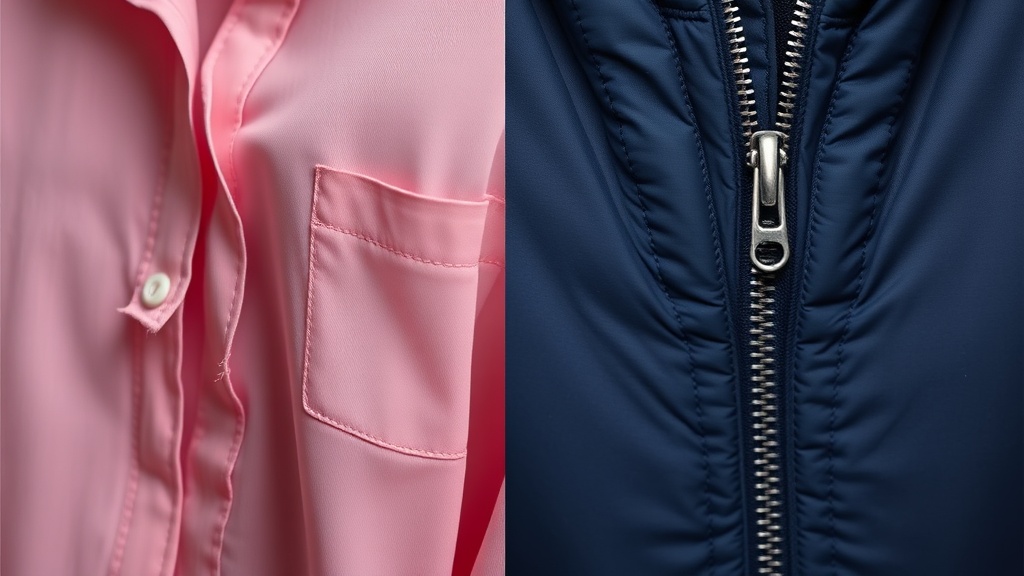
Women's Clothes Are Built Worse Than Men's. I Processed 62,000 Returns to Confirm It.

Here's something nobody's going to put in their IWD campaign email:
The fashion industry—which talks constantly about empowering women, supporting women, celebrating women—routinely builds women worse clothes than it builds men.
Thinner fabric. Fewer seam allowances. Zippers that won't hold. Pockets that are decorative fiction. Hems that fray after six washes. Hardware that oxidizes if you look at it sideways.
I spent three years in a returns operation handling product from dozens of brands across multiple categories. Men's. Women's. "Gender neutral." I saw the patterns. And one of the most consistent patterns I saw—in my own returns queue, at my own facility, across the brands we processed—was this: at comparable price points, women's garments failed more often, in more ways, and faster.
This is not a peer-reviewed study. I'm a former Returns Specialist, not a researcher. But I processed a lot of product, I logged failure modes, and I paid attention. Here's what I saw.
Let's Start With Fabric Weight
The simplest indicator of garment longevity is fabric weight, measured in grams per square meter (GSM). Heavier fabric generally means more fiber content, more durability, more structural integrity. There are exceptions, but as a heuristic it holds.
In my returns queue, men's basic crewnecks from mid-tier brands typically ran heavier than the women's equivalent silhouette from the same brand at the same price. I'm not publishing proprietary brand data—but the gap I observed was substantial. I've handled women's "premium cotton" knits that were nearly sheer. The tags said premium. The hand said otherwise.
The lighter fabric costs less to produce. The savings don't pass to you. The price at checkout is the same—sometimes higher, because women's fashion leans on aesthetic marketing to justify premium pricing. You can pay more for less material, engineered to last less time. Whether that's a deliberate product decision or the compounding result of a hundred small cost-cutting choices, I can't say from returns data alone. What I can say is that it happens.
Seam Allowances and the Math of Failure
A seam allowance is the strip of fabric between the stitch line and the raw edge. More allowance means the seam holds more material, puts less tension on the stitching, and gives you something to work with if you need to alter the garment later.
Standard seam allowance in quality construction: 5/8 inch (about 1.5 cm). This isn't a secret—it's in every pattern-making textbook.
What I regularly handled in women's fast-fashion and mid-tier returns: seams that had opened at stress points—underarms, inseams, pocket corners—after minimal wear. When I looked at why, the allowances were often a fraction of standard. Garments where there was simply nothing holding.
Men's workwear and casualwear at the same price tier came back with different failure modes. Not seam failures. More often: wrong size, color not as expected, changed mind. The structural failure category skewed different between categories.
I want to be careful here: I'm describing what came back to one returns facility over three years. I didn't have access to brand-level failure rate data, and I'm not claiming I ran a controlled study. I'm telling you what I saw enough times that I stopped being surprised by it.
Zippers: A Brief Rant From Someone Who Sorted Returns
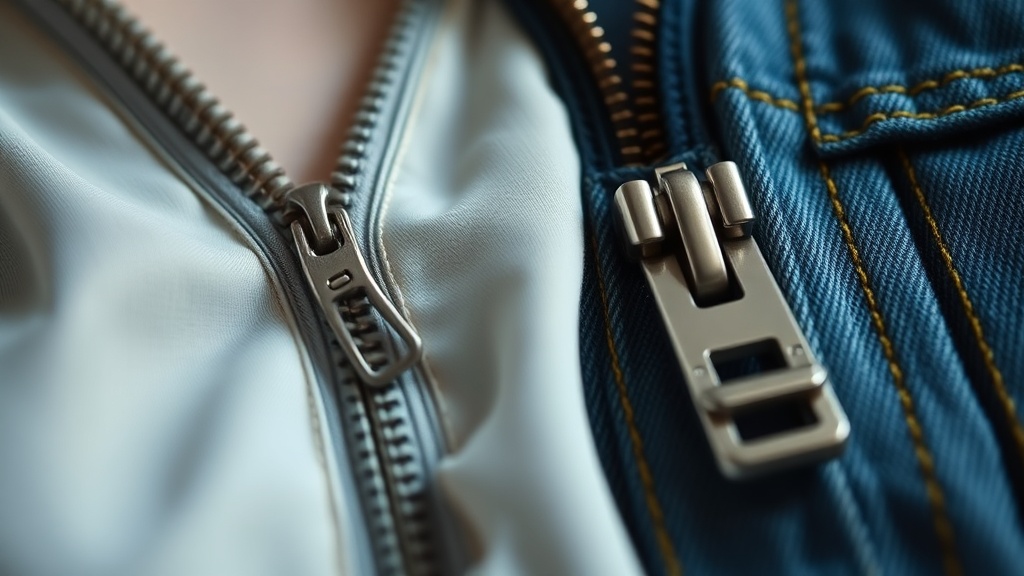
The zipper quality disparity between men's and women's garments at comparable prices is one of the things I noticed early and couldn't un-notice.
Men's outerwear, pants, and bags at mid-tier price points: YKK zippers consistently. Metal teeth, sliders with actual tension, pull tabs that seemed designed with the expectation they'd be used repeatedly.
Women's blouses, dresses, pants, and bags at the same price point: varied. Coil zippers where the coil was already separating on return. Sliders that required two hands. Decorative zipper pulls on pockets that don't open—which is its own rant.
The zipper is the easiest place to cut production cost on a garment because it's small, it's hard to compare in a store, and you won't know it's bad until you're late for something important. In the returns I processed, zipper-related failures were disproportionately concentrated in women's product. Not because women's garments use zippers more frequently. From what I saw, because the zippers used were cheaper.
The Pricing Question
Here's a real source: In 2015, the New York City Department of Consumer Affairs published a study—From Cradle to Cane: The Cost of Being a Female Consumer—documenting that women pay more than men for comparable products across multiple categories, including clothing. At the time of that study, women paid about 8% more for clothing on average.
That report is from 2015. I'm writing this in 2026. I don't have a current equivalent study to cite, and some later analyses have found the gap narrowing in certain categories. I'm not going to tell you the pattern definitively persists without current data—that wouldn't be honest. What I can tell you is that nothing in my returns experience suggested women were getting structurally superior product to justify any price premium.
The framing I can stand behind: the women's garments I processed failed in ways that suggested lower construction investment. Whether the current pricing spread has closed is a research question I'd need more data to answer.
What Men's Clothes Do Better (That Yours Should Too)
I want to be specific, not just critical.
Topstitching. Men's jeans, chinos, and work pants typically have topstitching at every major seam—functional topstitching that reinforces the seam and distributes stress. Women's pants at the same price point: often topstitched only where visible for aesthetic effect.
Lining in outerwear. Men's jackets at the $150+ price point are frequently fully or partially lined, which extends garment life and structural integrity. Women's jackets at the same price: often unlined, because the silhouette is designed to be "cleaner" (read: less fabric cost) and the assumption is you'll layer underneath.
Pocket construction. I've published the tape measure data separately. Men's pants have pockets with structural integrity: bar-tacked corners, proper depth, appropriate width. Women's pants have decorative openings or, if functional, pockets with inadequate depth. Bar-tacking—the reinforcement stitches at stress points—costs almost nothing to add and is systematically absent in women's garments.
Hardware weight and finish. Buttons, snaps, rivets, buckles, rings. Men's outerwear and bags use heavier hardware with more durable finishes. Women's fashion hardware is often lighter, thinner, and finished with plating that chips quickly—because "delicate" is the aesthetic expectation, and delicate is cheaper to produce.
Why This Matters for IWD Specifically
I'm writing this the week of International Women's Day—recognized annually on March 8, established by the UN in 1977—because I think the construction quality gap is worth naming in the same breath as the celebration.
Not to be cynical about IWD itself. But because what a company does with its product tells you something that the campaign email doesn't.
The campaign says: Empowered. Celebrated. Seen.
The product, in my experience: lighter fabric, less seam allowance, cheaper zippers, no real pockets, faster failure cycle, repeat purchase.
Both things can be true at the same time. A company can run a sincere IWD campaign and still make construction decisions that shortchange the customer. The incentives don't require bad intentions—they just require no one in the production chain having a strong enough reason to push back. The customer absorbs the loss. She just thinks her clothes "wore out."
You're allowed to hold both things in your head and decide what to do with them.
What I Do Now
I buy fewer garments. I inspect seams before purchasing. I hold fabric up to light to check weight and weave consistency. I check whether a zipper slides smoothly before I commit. I read care label fabric composition and do the math on how long that material will hold at the construction quality I can see in the store.
I buy men's cuts when they fit my body better—not as a political statement, but because the construction is frequently better for the same or lower price.
And I return things without guilt when the construction doesn't match the price, because that's information the brand needs to have. Returns data is how brands know what's failing. Some of them actually look at it. A few of them change things.
The rest of them send you IWD emails with the word "empowered" in them and hope you don't notice the seams are pulling.
Notice the seams.
Sloane Vance spent three years as a Returns Specialist processing e-commerce returns before starting fashionhauls.blog. She writes about what brands don't want you to know before you buy. The observations in this post reflect her direct experience at one returns facility; they're not a formal study, and she's not claiming they are.