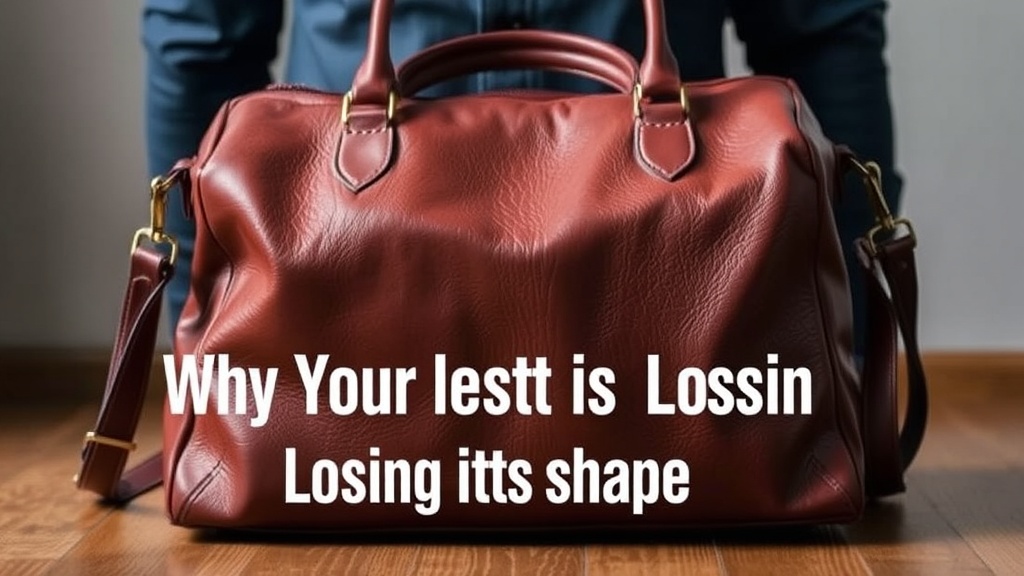
Why Your Leather Bag Is Losing Its Shape

Quick Tip
Always stuff your handbags with acid-free tissue paper when not in use to maintain their original silhouette.
The Sagging Silhouette: Why Your Leather Bag Is Losing Its Shape
A structured Celine Belt Bag or a classic Mulberry Bayswater looks incredible on the shelf, but six months later, it sits on your desk looking slumped, wrinkled, and tired. This loss of structural integrity isn't always a sign of a "bad" brand; more often, it is the result of poor storage habits and the physical weight of your daily essentials. Understanding how leather behaves under tension is the difference between a bag that lasts a decade and one that looks like a discarded rag by next season.
The Culprits of Structural Collapse
The most common reason for a collapsing bag is overstuffing. When you force a heavy laptop or a bulky water bottle into a bag designed for a slim silhouette, you are permanently stretching the grain of the leather. This creates "stress wrinkles" that are nearly impossible to reverse. Additionally, if you leave your bag sitting upright on a flat surface without any internal support, gravity is working against you every single hour it sits on your floor or a cafe chair.
- Gravity and Empty Space: An empty bag is a vulnerable bag. Without internal volume, the leather folds in on itself, creating permanent creases at the base.
- Heat Exposure: Leaving a leather tote in a hot car—common during summer trips to places like the Hamptons or even just a sunny parking garage—softens the collagen fibers in the leather, making it prone to drooping.
- Incorrect Weight Distribution: Putting all your heavy items (like a heavy tech pouch or a large wallet) in one specific corner puts uneven pressure on the seams and the leather panels.
How to Maintain the Silhouette
To prevent your investment from looking cheap, you need to implement a strict maintenance routine. Do not rely on the "dust bag" alone; that bag is for protection, not structural support.
- Use Bag Pillows or Stuffing: When not in use, fill your bag with acid-free tissue paper or specialized bag pillows. Avoid using newspaper, as the ink can transfer to your lining. The goal is to fill the volume without over-expanding the seams.
- Invest in a Bag Organizer: Use a felt or nylon bag organizer (often called a "purse insert"). This provides a rigid internal skeleton that distributes weight evenly and prevents the bottom from sagging when you carry heavy items like an iPad or a Kindle.
- Store Upright: Never hang your leather bags by their straps on a hook for long periods. This stretches the handles and pulls the body of the bag downward. Instead, stand them upright on a shelf, supported by an organizer.
If you notice your leather is starting to feel dry or stiff along with the loss of shape, it may be a sign that the natural oils are evaporating. Just as you wouldn't let foundation settle into fine lines by neglecting skin hydration, you cannot expect leather to maintain its tension without proper conditioning.