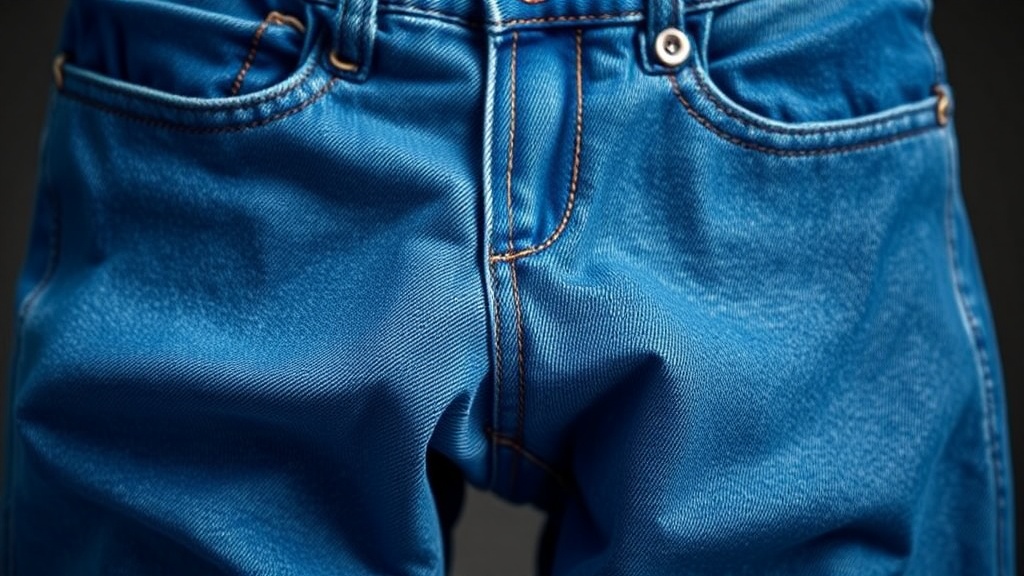
Why Do My Jeans Twist After One Wash? The Denim Shortcut Brands Hope You Ignore

Quick Tip
If the outer seam already creeps toward the front of your leg in the fitting room, the wash cycle will not save that pair.
Most people blame the washer when a pair of jeans starts corkscrewing around the leg. That’s the wrong culprit. In most cases, the problem started long before the first spin cycle—on the cutting table, in the fabric finishing, or in the brand’s decision to squeeze margin out of construction that should have been stable in the first place. If you’ve ever bought denim that looked fine in the fitting room and then turned wonky after one laundry day, this is what was actually going on and how to stop paying for it.
Twisting jeans are one of those return-counter classics that people talk themselves out of. They assume they washed them wrong, dried them too hot, or expected too much from stretch denim. Sometimes care does make the issue show up faster. It usually doesn’t create the issue from nothing. When the leg seam starts drifting toward the front or wrapping around the calf, you’re usually looking at fabric cut off-grain, uneven shrinkage, poor stabilization, or a pattern that was pushed past what the cloth could hold.
If both legs start spiraling after one or two wears, that isn’t you being picky. That’s the garment telling on itself.
Why do jeans twist after washing?
The short answer: the fabric threads weren’t sitting where they needed to sit when the jeans were cut and sewn. Denim has a grain, and grain matters. If the pattern pieces are cut off-grain, the fabric can pull itself into a spiral once moisture, agitation, and heat hit it. The same thing happens when the fabric wasn’t properly straightened before cutting or when the finishing process leaves tension in the cloth that later relaxes in your laundry room.
University of Nebraska-Lincoln Extension has a plain-language piece on why following the grainline matters in fabric cutting, and it applies here even if you never plan to sew your own jeans: Follow That Grainline. Brands love to talk about washes, rise, stretch, and “vintage character.” They talk a lot less about whether the leg panels were aligned well enough to stay straight after the garment lived like a garment.
There’s also a denim-specific wrinkle. Many jeans today include elastane or another stretch fiber, which can make fit feel forgiving on day one. That same comfort can mask sloppy stability. If the base denim is lightweight, heavily processed, or underbuilt for the cut, stretch doesn’t rescue it. It can make the failure feel more dramatic because the fabric has less discipline to pull the seam back where it belongs.
Washing exposes the weakness because water relaxes fibers, heat changes tension, and tumbling adds stress. The FTC’s care labeling guidance exists for a reason: brands are supposed to give care instructions that are backed by evidence for the full garment, not vibes. If your jeans twist after you followed a reasonable label, that’s not a cute quirk. That’s a quality miss.
Can you spot twisting before you buy?
Sometimes, yes. Not always. The hardest part is that bad denim can look perfectly normal while you’re standing still in flattering store lighting. You need to check for clues that have nothing to do with how snatched your waist looks.
- Hang the jeans by the waistband and look at the side seams. If one seam already swings forward or backward, pay attention.
- Lay one leg flat and fold it roughly along the center. If the outseam and inseam refuse to sit in a clean line, the cut may already be fighting the fabric.
- Look at the knee area. Off-grain denim often starts showing stress there first because the leg twists as you move.
- Check whiskering and sanding. Heavy surface distressing can distract from the fact that the leg line isn’t hanging straight.
- Watch the hem. If the hem torque looks odd on the hanger, laundering usually won’t improve it.
The fitting room test is simple: stand naturally, then turn sideways. If the outer seam is crawling toward the front of your leg before you’ve even worn the jeans out of the store, leave them. Don’t bargain with yourself because the wash is good or the sale is aggressive.
| What you see | What it usually means |
|---|---|
| Side seam drifting forward | Leg panel may be cut off-grain or pulled by unstable stretch denim |
| Hem looks slightly corkscrewed | Fabric tension or finishing may already be out of balance |
| One leg twists more than the other | Inconsistent cutting or sewing across panels |
| Seat fits but leg line feels oddly torqued | Pattern and fabric are not cooperating, even if the waist looks good |
This is why I don’t treat “but it fits so well” as the final word on denim. A flattering mirror moment is cheap. A leg that still hangs straight after five washes is harder to fake.
Are stretch jeans more likely to twist?
Not automatically. Cheap stretch jeans are more likely to expose weak construction. That’s different. A well-made stretch denim can hold its shape just fine. The problem is that a lot of mass-market denim uses stretch as a selling point and then pairs it with lighter cloth, more aggressive finishing, and faster production. You get softness, instant comfort, and a nice sales-floor pitch. You also get less room for error.
Fiber content matters here, and brands are required to disclose it. The FTC’s Textile Fiber Products Identification Act is the boring legal backbone behind the label you should actually read. If a brand is selling you “rigid-inspired” jeans that are mostly cotton with a small amount of elastane, fine. If a pair feels suspiciously thin, limp, and over-soft right off the rack, that label tells you whether you’re buying denim or a jegging in better PR.
As a rough shopping rule, more stretch means you should be more demanding about every other sign of quality. Look harder at seam alignment. Look harder at recovery after you sit down. Look harder at whether the knees bag during a two-minute try-on. Stretch can be great in straight jeans, flares, or fitted cuts when the fabric still has body. When the fabric has no backbone, the jeans don’t break in. They break down.
What should you check on the label before you commit?
Start with the fiber label, then the care label. Most shoppers barely glance at either, which is convenient for brands. The fiber label tells you what kind of behavior to expect. The care label tells you how much babying the brand thinks the garment needs to survive normal life.
If the fiber blend is mostly cotton with a small touch of stretch, you can expect something closer to traditional denim behavior. If polyester or rayon content is high, or the fabric feels unusually drapey for the cut, be alert for shape drift. That doesn’t mean the jeans are automatically bad. It means you need the construction to be good enough to compensate. Often, at mall price points, it isn’t.
Then read the care label like a skeptic. A normal-looking pair of casual jeans that asks for precious handling deserves a second look. The FTC says care instructions should be based on reliable evidence for the finished garment, not just one component of it. If the label is basically saying, “Please don’t expose these pants to the conditions pants usually experience,” that’s useful information.
- Machine wash cold, tumble dry low: common and fine if the denim feels stable.
- Lay flat to dry or reshape while damp: not a deal-breaker, but it tells you the fabric may move.
- Wash separately / color transfer warnings: common in dark indigo, though still annoying.
- Dry clean only denim: sometimes justified for embellished or coated styles, but absurd for many everyday pairs.
If a brand is charging up while offloading the risk to your laundry habits, that’s not premium. That’s clever blame management.
What details separate solid denim from disposable denim?
Forget the marketing language for a minute. “Heritage.” “Artisanal wash.” “Vintage hand-feel.” None of that matters if the leg is spiraling by wash two. What matters is whether the cloth, cut, and construction are working together.
Look for denim with some body. It doesn’t have to feel like cardboard, and not every pair needs to be heavyweight. It does need enough structure to support the silhouette the brand is promising. A wide-leg jean in tissue-thin stretch denim is a red flag. So is a fitted straight jean that feels buttery to the point of mush on day one.
Then inspect the seams. Are they even? Does the topstitching stay clean through stress points? Are the pockets balanced, or does one side already look slightly dragged? Cheap finishing can hide a lot in the first week, especially dark rinse denim that hasn’t yet shown where it wants to pull. Clean construction is boring to photograph, which is exactly why it matters.
Price isn’t a safety net either. I’ve seen expensive jeans fail because the brand spent money on wash development and branding while shaving costs in places shoppers don’t inspect closely. A higher ticket can buy better denim. It can also buy better storytelling. Those aren’t the same purchase.
Can twisted jeans be fixed after the fact?
Usually not in a way that makes the pair truly worth keeping. You can sometimes reduce the look temporarily by washing cold, skipping the dryer, smoothing the seams back into place, and letting the jeans dry flat or hang carefully. That may calm the spiral for a wear or two. It rarely changes the structure that caused it.
A tailor can help with hems, waist gaps, rise tweaks, and sometimes leg shape. A tailor cannot magically rewrite the grain of fabric that was cut wrong from the start. If the twist is mild and the jeans were cheap, you might decide to keep them for rough wear. If the twist is obvious and the price was real money, return them while the tags are still a possibility and move on.
This is the part brands count on people skipping. They know a lot of customers will blame themselves, wash more carefully, and hope the issue settles. It usually doesn’t. Bad denim trains shoppers to accept decline as normal wear. It isn’t normal. It’s just common.
What’s the smartest way to shop denim if you’re tired of this?
Shop slower and inspect harder. Try on fewer pairs, but interrogate each one. Ignore the sales copy. Ignore the influencer language about “buttery softness.” Ignore the fantasy that a pair with crooked seams will somehow mature into better behavior at home. Start with alignment, fabric body, fiber content, and care demands. Then decide whether the fit is still worth talking about.
- Check seam line first, before styling.
- Read fiber content before price tag.
- Read care label before you get attached.
- Walk, sit, and turn sideways in the fitting room.
- Reject any pair that already twists, bags hard, or looks tired under bright light.
Denim doesn’t need to be expensive to be decent. It does need to be honest. And if a pair can’t keep its leg straight through a normal wash, it has no business asking for closet space, much less full price.