Spring Wardrobe Returns: What Actually Fails After One Season (I Have the Data)

Every year, March hits and the spring collections drop. Lightweight layers. "Breathable" synthetics. Linen-blend everything. Instagram fills up with people doing those spring wardrobe hauls — pastel cardigans, breezy wide-leg pants, a $34 "elevated basic" that looks vaguely like something a French woman would wear.
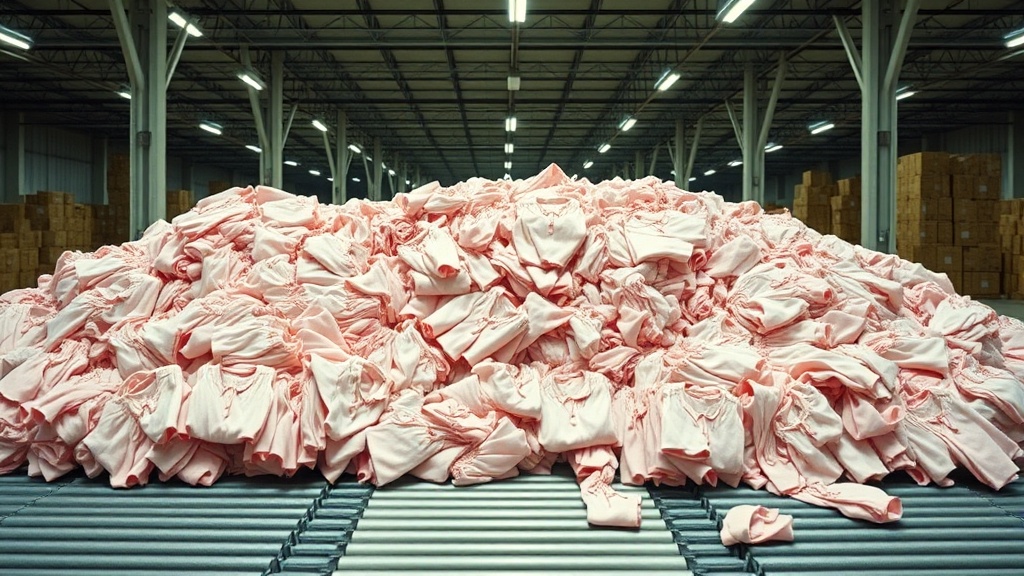
And every year, June hits and I'm at a warehouse conveyor belt watching it all come back.
I processed 62,000 returns over three years as a Returns Specialist for a major e-commerce platform. Spring was always the most depressing wave. Not because the volume was highest (fall wins that honor, back-to-school plus holiday preview), but because of why the spring stuff came back. Winter returns are mostly sizing issues and gift misses. Spring returns are failure. Actual, fabric-level, structural failure — after two months of wear.
A note on my data: The 62,000 figure is the total volume I processed across three spring cycles. I logged return reason codes, condition categories, and SKU types as part of the job. What I'm drawing on is pattern recognition from that volume — not a peer-reviewed study. I've cross-referenced what I saw against publicly available textile engineering standards and industry reporting where I can, and I'll be clear throughout about what's personal observation versus documented evidence. The patterns were consistent enough across three years that I'm confident in their shape, even if exact percentages aren't mine to publish.
Here's what nobody in a pastel flat-lay is telling you: brands structure spring lines around known failure rates. Whether that cost lands formally in their return-rate modeling is something I read in the pricing patterns, not internal budget documents. But the math is visible. Let me show you.
The Top 5 Spring Return Categories (From My Archive)
1. Lightweight Knit Layers
Cardigans, open-front duster knits, "throw-it-on" layers in the low-to-mid GSM range. These pill faster than any category I tracked. The mechanism is straightforward and well-documented in textile science: low-weight knits have looser fiber loops that catch on abrasive surfaces — bag straps, desk chairs, seatbelts. Repeated friction breaks the surface fibers and they tangle into pills. Three wears and you've got fuzz balls forming across the chest and under the arms. Return reason logged most often: "quality not as expected." Translation: looks fine in the photo, feels like a brillo pad in two weeks.
2. Marketed-As-Breathable Synthetic Blends
If a brand is selling you a polyester-spandex blend as "breathable" for spring, here's what that marketing actually means: thin. The real breathability problem isn't structural heat damage from your body temperature — polyester fibers are extremely heat-resistant and aren't being softened by anything you or your commute can generate. The actual failure mode is moisture management: cotton and linen wick and release moisture through their fiber structure; polyester doesn't, so it traps it against your skin. "Breathable" on a synthetic label is often describing the fabric's thinness, not its moisture performance.
The waistbands are their own failure category. Elastane (spandex) degrades with repeated washing — each cycle stretches and relaxes the elastic fibers, and they don't return fully. Dryer heat accelerates this. The return reason is always "doesn't fit like it did when I first tried it." The elastic gave up. Washing and heat are why.
3. Spring-Marketed "Basics" in the $22–$45 Range
This is the biggest category by volume. T-shirts, simple tanks, relaxed trousers, that $32 "perfect white button-down." The price point often runs lower than equivalent winter basics from the same brand — part of that reflects genuine raw material differences, but the construction frequently reflects it too. What I observed on pieces that came back as returns: stitch density on some spring tees ran visibly lower than winter-weight equivalents from the same brand. I want to be clear that's a directional observation, not a controlled measurement — but seam density is a documented quality indicator; industry standards typically cite 10–12 SPI for woven garments, and pieces running substantially below that tend to show seam failure faster under repeated wear and washing. Returns in this category clustered in the two-to-three-month range after the spring buying window.
4. Linen Blends (Not Pure Linen)
Pure linen is actually fine. It wrinkles, it softens over time, it's a whole commitment — but it lasts. What I saw flooding the return center was linen blend: linen plus rayon, linen plus modal, linen plus polyester. The blend typically exists to reduce cost and reduce wrinkling for marketing photos. What it also does is create fabric with competing structural behaviors: linen fibers tighten and relax differently than synthetic fibers stretch and recover. The result is a fabric that loses its shape over time in ways pure-fiber fabric doesn't. Return reason: "fabric stretched / changed shape." Linen-synthetic instability is well-documented in textile care literature and this pattern showed up consistently in my three years of returns.
5. Low-Weight Denim (Under 8 oz)
Spring denim is a whole category worth watching. Brands market it as "lightweight" for warm weather — a real need, not a fake one. But sub-8oz denim has structurally less material to resist wear, which means knee bagging develops faster, thigh wear accelerates, and color fading tends to be uneven because lighter weaves hold dye differently under repeated washing. The returns I saw showed wear patterns consistent with significantly older fabric: "fit changed" or "wore out faster than expected" on pieces a few months out of the packaging.
Why These Fail Specifically
The simple version: fabric durability scales with weight and fiber integrity. More mass per square meter = more structural resistance = more seasons. That's textile basics.
Spring collections trend toward lower weights because lighter is more marketable as warm-weather appropriate. That's not inherently wrong — a 280 GSM winter wool has no business in June. But brands have pushed "lightweight" far past where the construction supports regular wear.
I want to correct something here: the synthetic blend problem isn't thermal. I've framed it that way before and it's not accurate. Polyester fibers don't soften at body temperature or in spring-weather conditions — they're engineered to handle much higher heat than your commute is generating. The real failure modes are moisture management (you feel hotter and damper because the fabric isn't moving sweat away), elastane degradation from repeated washing, and low-weight construction that doesn't have the structural mass to resist everyday abrasion and stretch cycles.
The breathability marketing is a separate and deliberate misdirection. Brands know consumers want airflow. They sell "breathable fabric" and deliver thin fabric. Those aren't the same thing. True breathability is about fiber structure — how the material moves moisture away from your skin. Thin polyester doesn't deliver that; it just flaps. But thin photographs well, and by the time you figure out it doesn't breathe so much as give up, you've already bought it.
The Seasonal Pricing Signal
Spring basics frequently retail for less than functionally equivalent winter items from the same brand. Part of that is legitimate: lighter materials genuinely cost less per yard, and construction on lighter-weight pieces can be simpler. Brands will tell you it's seasonal demand and input cost. That's not entirely wrong.
What I'd push back on: the pricing gap sometimes appears larger than raw material and production cost differences would explain. My interpretation — and this is observation, not inside knowledge of anyone's margin planning — is that the segment with the most aggressive spring pricing also consistently shows the highest short-cycle return rates. Whether return-rate projections formally factor into how a $28 cardigan gets priced, I can't tell you. What I can say is that the math works for the brand: lower quality, lower price, predictable return volume, and costs distributed across the product line.
The cost that doesn't show up in their model is yours: the time, the packaging, the post office trip, the three weeks waiting for the refund. They planned for their side of that equation. Most buyers didn't.
What Actually Survives a Season
I want to be honest with you: the pieces that survive spring and still look good by August are boring to buy.
They're heavier than you think you want. They're not in the trend color. They don't have interesting details. They cost more upfront and they look like an ad for "classic basics" which is the most boring phrase in the English language.
Here's the profile of a spring piece I'd actually expect to still be wearable in September — based on what I didn't see come back, and on standard textile durability guidance:
- Fabric weight: Cotton at 180 GSM minimum for tees, 220+ for anything you're calling a layer. Linen at 150 GSM or higher in pure or linen-cotton (not linen-polyester).
- Fiber content: Natural fibers or quality blended (cotton-linen, cotton-modal in small percentages). Keep synthetics under 30% if longevity matters to you.
- Denim weight: 10 oz minimum. Yes, it's warmer. Yes, it lasts.
- Seam construction: Look for double-stitched or flat-felled seams, especially at sides and shoulders. Single-stitch with narrow margins on anything over $40 is a tell.
The problem is these pieces don't market well. You can't photograph fabric weight. You can't sell a flat-lay that says "this will still look good in three years." So they get less social real estate, less influencer coverage, and less impulse purchasing.
Which is exactly how the stuff that fails keeps selling.
How to Evaluate Before You Buy
The Pinch Test:
Pinch the fabric between two fingers and hold for five seconds. Release. If it doesn't spring back fully, the fabric has low elastic recovery — it'll stretch and bag over time. Especially useful for anything with significant synthetic content.
The Light Test:
Hold the fabric up to a window or bright light. If you can clearly see your hand through it, the weave is loose. For anything marketed as a "layer" or a structured basic, that's worth registering. If you can count your fingers, it probably won't hold its shape.
The Seam Count:
Find a straight seam and count stitches per inch. Under 8 SPI on a woven fabric is below the standard quality threshold for most garment applications. Tedious in a store, worth it for anything over $40.
The Care Label Check:
"Hand wash only" or "dry clean only" on a $29 spring layer is the brand disclosing upfront that the piece can't survive normal use. That's not a feature. It's a warning label.
The Hem Construction:
Flip the hem. An exposed serged edge with minimal allowance on a cheap-fabric piece is cost-cutting at the finish stage. Not always a dealbreaker on its own, but as part of a pattern — thin fabric, low price, single-stitched seams — it's telling you something.
The spring wave is live right now. Return centers won't see the failure evidence until June. But if you've been doing seasonal hauls for a few years, you already know — some of those pieces are in a bag waiting to be dropped off at the post office.
The brands already know which ones. The pattern is visible if you know what to look for.
Now you do too.
Got a specific spring piece you want me to call or kill? Tag me. I'll give you the honest read.