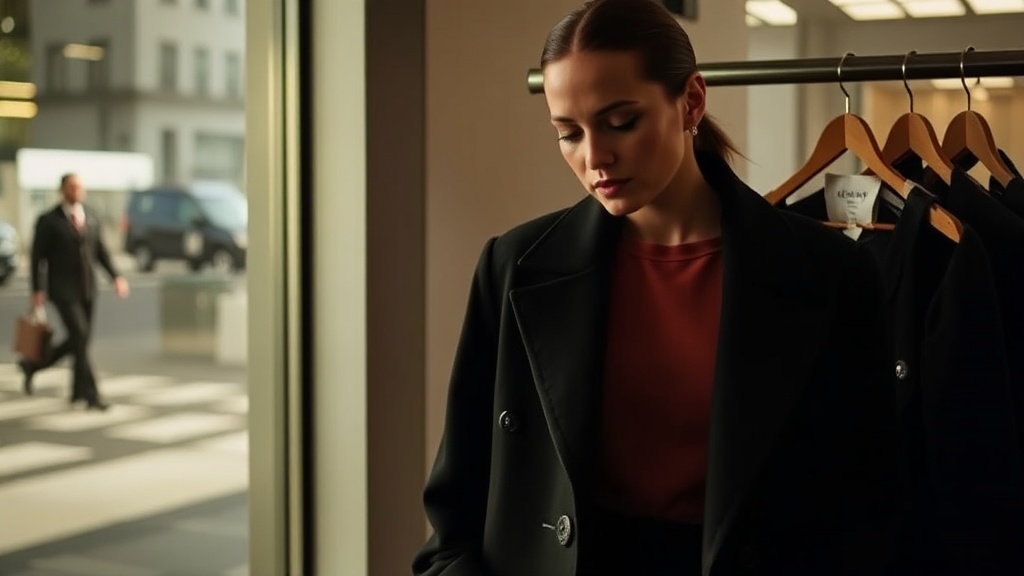
5 Wardrobe Essentials Every Fashion Lover Needs This Season

The Tailored Blazer
Classic White Sneakers
High-Quality Denim Jeans
A Versatile Silk Blouse
The Structured Handbag
This post breaks down five wardrobe staples that hold up through real wear—not just a quick try-on in front of a bedroom mirror. If you're tired of hems unraveling, zippers catching, and fabrics pilling after two washes, these are the pieces worth making room for. Each item here has been vetted for construction flaws, fabric quality, and that one detail that usually sends clothes straight back to the warehouse.
What are the 5 wardrobe staples every fashion lover needs this season?
The five pieces are a structured blazer, high-quality denim, a cashmere or wool-blend sweater, leather boots with stitched soles, and a handbag with solid hardware. These aren't trend-driven items—they're the backbone of a closet that doesn't fall apart by next spring.
1. The Structured Blazer That Keeps Its Shape
Blazers are the most returned item in womenswear for one reason: the shoulder seams collapse or the lining bunches after a single dry-cleaning cycle. Most fast-fashion blazers use fused interfacing—basically glue holding the fabric together—instead of canvased construction. After a few wears, you'll see bubbling at the lapels. That's not a flaw in your care routine; that's a manufacturing shortcut designed to cut costs.
Look for styles with horsehair or canvas interlining. The J.Crew Parke Blazer uses a half-canvas construction that breathes better and recovers from creasing without that cardboard stiffness. The Everlane Oversized Blazer, while more casual, uses a viscose-linen blend that doesn't pill at the armholes the way polyester blends do. Here's the thing: if the blazer feels stiff like a manila folder in the store, it'll feel like cardboard—and eventually crack—at home.
Check the collar roll. A well-made blazer has a gentle curve where the collar meets the lapel. If it sits flat or gaps away from your neck, the pattern grading was rushed. Worth noting: fully lined blazers often hide construction sins. A half-lined or unlined option lets you inspect the seam finishing. The catch? You'll probably need to wear a cami underneath.
2. Denim That Doesn't Bag Out by Lunchtime
Stretch denim is comfortable. It's also the reason so many pairs get returned after one wear. Anything over 2% elastane will sag at the knees and waistband within hours. That "jegging" feel might work for a three-hour dinner, but it's a disaster for a full day of sitting, walking, and actually living in your clothes.
Opt for rigid or low-stretch denim. Levi's 501 Originals—99% cotton with 1% elastane—hold their shape for years. Agolde's '90s Pinch Waist uses organic cotton with minimal stretch and features a higher rise that doesn't create that dreaded back gap. The catch? Rigid denim needs a break-in period. Wear them around the house before committing to a full day out.
Inspect the inseam stitching. Chain stitching (that looped thread pattern inside the leg) allows jeans to move with you. Overlocked raw edges that look like serged zigzags? Those fray internally and create holes at the thigh within six months. Vogue's denim buying guide covers this in more detail if you want to geek out on selvedge vs. non-selvedge construction.
How can you tell if a blazer is actually worth the price?
A quality blazer has working buttonholes (called surgeon's cuffs), consistent pattern matching at the seams, and lining that's attached with floating stitches rather than being fused directly to the shell fabric. Turn the jacket inside out. If the seams are overlocked with dense zigzag stitching and the lining is glued at the edges, it won't survive more than one season of regular wear.
Press the lapel between your fingers. On a cheap blazer, you'll probably feel a plastic-like crinkle—that's the fusible interfacing breaking down. On a better piece, you'll feel soft layers that move independently. The shoulders should end exactly where your natural shoulder ends. Anything past that creates a droopy silhouette that tailoring can't easily fix. If the shoulder seam hits halfway down your upper arm, send it back.
3. A Knit Sweater That Survives the Wash Cycle
Cashmere gets all the hype, but 100% cashmere pills almost immediately. It's soft because the fibers are short, and short fibers migrate to the surface and tangle. The best sweaters are usually a blend: 90% wool or cashmere with 10% silk or nylon for strength. COS makes a wool-alpaca crewneck that outlasts most pure cashmere pieces at twice the price. Everlane's Grade-A Cashmere Crew is decent, though the cuffs do stretch if you push them up habitually.
Check the stitch density. Hold the sweater up to light. If you can see through it, the gauge is too loose and it'll snag on jewelry, bag straps, and rough doorframes. A 12-gauge knit (finer, tighter stitches) wears longer than a chunky 3-gauge. That said, tighter knits show body oil faster around the underarms, so you'll need to rotate wear rather than living in the same one three days a week.
Machine-washable wool is mostly a trap. The chemical treatment that makes wool "washable" actually strips the natural lanolin that gives the fiber its resilience. Hand-washing in cold water with a wool-specific detergent preserves the fibers far better than the "gentle cycle" ever will.
Which fabrics hold up best through repeated washing?
Cotton poplin, wool crepe, and silk charmeuse (when properly cared for) outlast polyester, rayon, and standard viscose by years. Natural fibers can be repaired, re-dyed, and refreshed. Synthetics often develop permanent odor retention, pilling, and static that can't be reversed no matter how much fabric softener you dump in.
| Fabric | Wash Durability | Common Failure Point | Best Used For |
|---|---|---|---|
| 100% Cotton (mid-weight) | High—softens with washes | Shrinkage if dried hot | Shirting, denim, tees |
| Wool Crepe | Medium—needs gentle handling | Pilling under arms/straps | Blazers, trousers, dresses |
| Silk Charmeuse | Medium—hand wash or dry clean | Water spotting, snagging | Blouses, slip skirts, linings |
| Polyester | High—doesn't degrade visually | Permanent odors, static buildup | Costume pieces, activewear |
| Viscose/Rayon | Low—weakens when wet | Shrinking, twisting, tearing | Seasonal trend pieces only |
4. Boots With Stitch-Down Construction
Boots are where fast fashion really shows its cracks. Cemented soles (glued on) separate after a few months of rain and pavement friction. Once the sole peels at the toe or heel, the boot is basically landfill. Blake-stitched or Goodyear welted construction allows the sole to be replaced, which means the boot can last a decade if you treat the leather right.
Dr. Martens 1460 boots use a heat-sealed welt that holds up better than most cemented options in the same price bracket. Blundstone's #500 series features replaceable footbeds and a sole that can be resoled by a cobbler. For a dressier option, Sam Edelman's Winnie boot uses a Blake stitch that creates a sleeker profile without the bulk of a traditional welt. The catch? Blake-stitched boots aren't as water-resistant as Goodyear welted ones.
Check the leather grade. Full-grain leather develops a patina and resists water. "Genuine leather" is actually the lowest grade—it's the leftover scraps pressed together. If the boot feels plasticky or has an overly uniform grain pattern, it's probably corrected grain with a thick polyurethane coating. That coating cracks before the leather underneath ever would. GQ's quality buying guide explains leather grading in depth if you want to avoid getting scammed by marketing terms.
5. A Handbag That Doesn't Weigh Itself Down
The most returned bags? The ones that look structured on the shelf but collapse into a puddle once you actually load them. Hardware tarnishes. Straps crack at the stress points. Zippers separate from the tape. A good bag starts with the weight of the empty piece—if it's heavy before you add your keys and phone, it'll destroy your shoulder by noon.
Longchamp's Le Pliage Energy tote uses recycled canvas with leather trim and weighs under a pound empty. The straps are cross-stitched at the base, which is where most totes fail first. For something more polished, Coach's Tabby Shoulder Bag has a leather-lined interior (not that cheap synthetic suede) and solid brass hardware that doesn't flake. The catch? That brass will scratch. But scratched brass looks vintage. Flaking gold-tone hardware just looks cheap.
Look at the zipper tape. YKK zippers are the industry standard for a reason—the slider doesn't catch and the teeth don't separate under tension. If a bag uses an unbranded zipper, test it repeatedly in the store. A zipper that sticks on an empty bag will be a nightmare once it's stuffed with a laptop and a water bottle. Harper's Bazaar regularly covers bag trends, but more importantly, their reviews note construction details most product descriptions conveniently skip.
What's actually worth spending more on this season?
Spend on the items that touch your body the most and move the most: boots, jeans, and blazers. These three categories suffer the most structural stress and the quality gap between a $50 version and a $200 version is immediately visible after ten wears. Sweaters and bags can be smart mid-range investments if you choose the right materials and inspect the seams before removing the tags.
That $29 blazer? The shoulder pads will warp. The $40 boots? The sole will detach in the rain. The $15 fast-fashion sweater? It'll pill before the return window even closes. Here's the thing: buying fewer, better pieces isn't about minimalism or some luxury fantasy. It's about not having to drag yourself to the post office with yet another box of disappointments.
This season, before clicking "add to cart," zoom in on the inside seams. Read the fabric composition. Ask yourself if you'd still want to deal with this piece after the excitement of the unboxing wears off. If the answer's no, keep scrolling. Your closet—and your future self—will thank you.